Ideas
A workplace hygiene supply service
A practical supply offer for small offices, built around a site survey, agreed stock list and clear responsibilities.
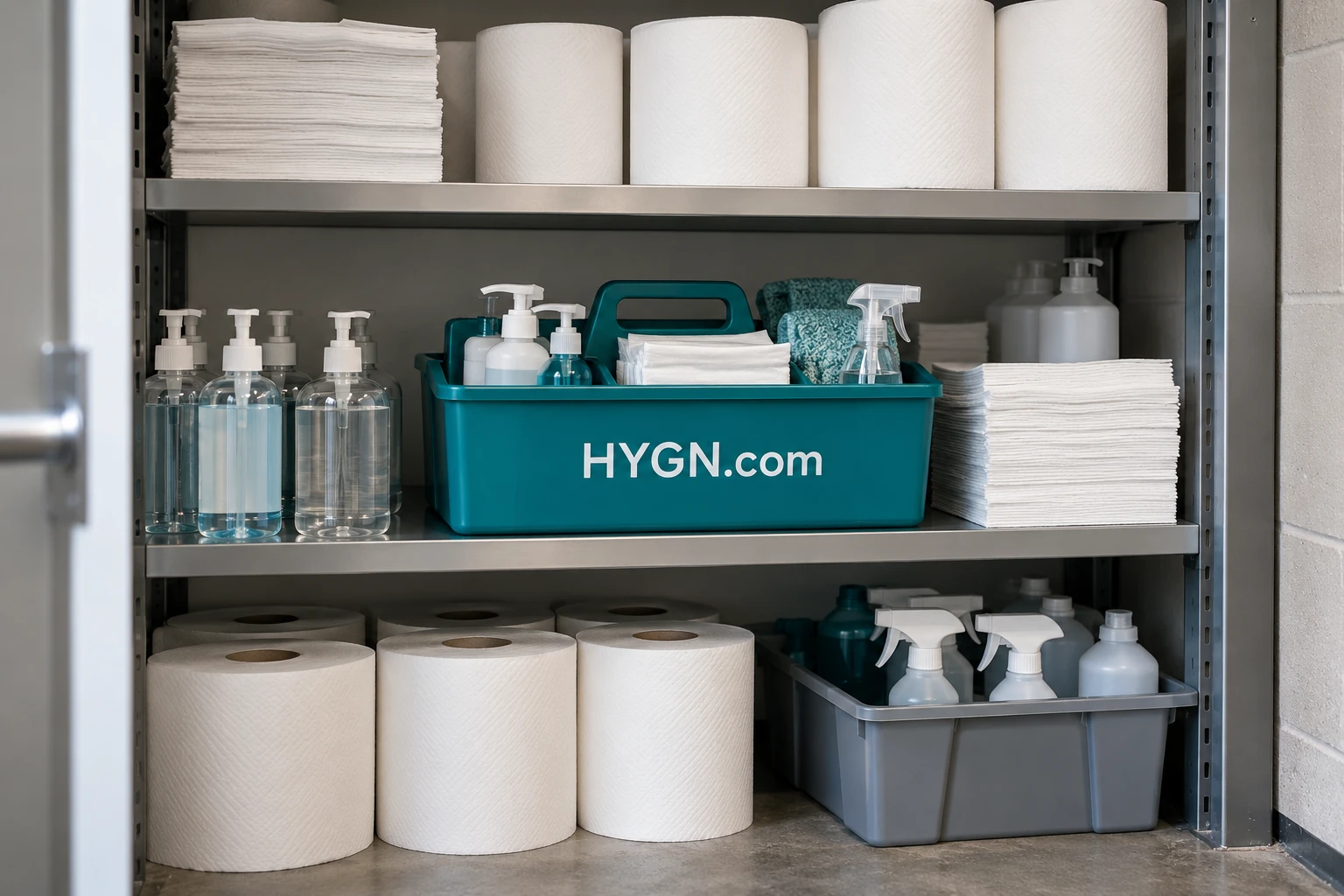
A small workplace can have a surprisingly scattered supply routine. Hand wash lives in one cupboard, paper goods arrive through a general office order and the person who notices a shortage is not always the person allowed to buy replacements. A focused supply service could start by making that routine visible, then take responsibility for a clearly defined part of it.
This illustrative concept uses HYGN.com for a workplace hygiene supply business serving a specific local area. It is a proposed use of the domain, not a description of an existing service. The first offer could cover a limited list of washroom and kitchen supplies for small offices, with scheduled stock checks and replenishment. Cleaning, equipment maintenance and other services would need separate scope and agreements.
Start with the person who places the order
A useful first customer might be an office manager responsible for one location and a modest set of shared facilities. Interview that person about their last urgent purchase. Which item ran out, who found the problem, how long did approval take and where did the replacement come from? A concrete incident reveals more than asking whether they would like a convenient service.
Ask who owns the budget and who receives deliveries. These may be different people. A service that visits during a locked building's opening hours needs an agreed contact and access procedure. A supply-only arrangement needs someone onsite to unpack and store goods. Put these operational details into the offer before promising a regular schedule or describing an all-inclusive monthly fee.
The SBA business planning resources can help turn those conversations into a written customer and cost plan. Keep the interview findings attached to the assumptions they change.
Use the survey to define the job
Walk the location with the customer's permission and list each supply point. Record the product currently used, dispenser model where relevant, usable storage space and the person responsible for checking it. Photographs can help identify compatible refills, but only collect what the customer permits and avoid capturing personal information. Give each location a simple identifier that can appear on the stock sheet.
The survey should also identify constraints. Perhaps bulk cartons cannot fit in the cupboard, a reception desk accepts deliveries only on certain days or the building owner specifies a particular dispenser. These details affect the service more than a broad promise of convenience. Keep the initial assortment compatible with the site and record who approves any substitute before it is ordered.
Separate supplies from service
Offer a written list of included items and a separate explanation of the work. For example, the customer could buy approved supplies plus a scheduled visit to count stock, place an order and put away delivered cartons. A different customer may need only a consolidated delivery. Presenting these as distinct arrangements makes it easier to price labor, travel and products accurately.
Specify what a visit does not cover in the agreement where it affects the customer's expectations. A stock check is different from cleaning a dispenser or servicing equipment. If a task requires training, specialist handling or manufacturer instructions, establish that capability before including it. The sales conversation can remain simple while the service document describes the actual responsibilities carefully.
Test a route before selling a large territory
Begin with a compact area and a realistic visit window. Travel, parking, access and receiving time can dominate a small order. Plan a sample route using actual addresses supplied by interested customers and allow time for delays. Do not price the service as though every stop sits next door to the previous one or every carton can be carried straight inside.
A pilot might use a fortnightly check with ordering based on observed stock, rather than an automatic fixed box. Record how long each task takes and whether the expected contact is available. Review the route after several cycles. The right adjustment could be a different delivery day, a larger reserve or moving a customer to a delivery-only option.
Make procurement easy to approve
Give the buyer a concise proposal showing the initial inventory, reorder method, visit frequency, charges and cancellation terms. Include one sample invoice so the finance team can see how products and service appear. Ask whether purchase order numbers, approved supplier forms or particular invoice fields are required. These questions are part of winning usable business, even when the company is small.
Agree on a spending threshold for exceptions. If a dispenser breaks or an approved product becomes unavailable, the operator should know who can authorize a change. Record that decision with the order. Quietly substituting an unfamiliar product can create confusion at the supply point and extra work for the customer, even if the replacement appears similar in a catalog.
Use the website as a useful working address
HYGN.com could explain the service area, display a sample supply list and let qualified buyers request a survey. The short domain has an obvious hygiene association while leaving space for different workplace categories. It would still need a clear description such as workplace supplies so visitors understand the offer immediately. Service terms, delivery boundaries and available products should carry the detail.
After launch, a customer page could hold an agreed list and a simple request form. Start with tools the operator can keep accurate. A polished portal that displays yesterday's inventory creates more trouble than a current stock sheet shared through the customer's preferred process. Add automation when repeated work and reliable data justify it.
For the administrative side, the SBA business management resources provide a starting point for organizing records and responsibilities as the service takes shape.
Measure the pilot's ordinary details
Review stockouts, unnecessary purchases, travel time, damaged deliveries and invoice questions. Ask the office manager whether the arrangement removed a task or merely moved it to another inbox. Compare the quoted time with the actual work. A service can feel useful to the customer and still need a narrower assortment or a different route to operate sensibly.
The next step is a sample site survey and a one-page scope for a single office. Use it to have three specific conversations with potential buyers. The goal is to discover which replenishment job they will pay someone else to own, and which parts they prefer to keep. That evidence can shape a focused HYGN.com offer before a broader launch.
A direction in mind?
HYGN.com is available for acquisition. Introduce your plans to begin the conversation.
Inquire about HYGN.com