
Ideas
A refill-first personal care brand
Start with two everyday products, a useful bottle and a replenishment routine customers can understand.
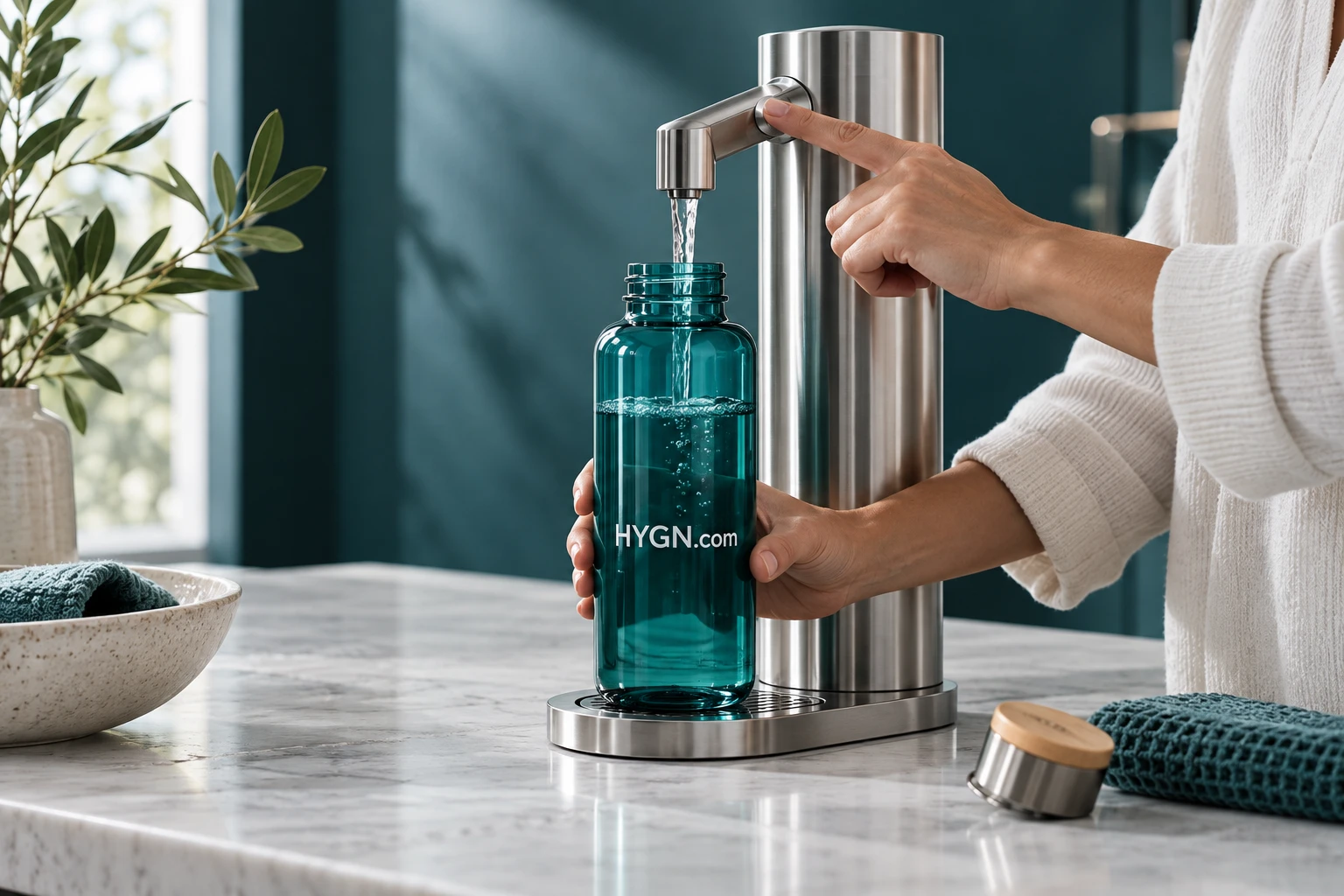
A refill range works best when the second purchase feels as considered as the first. The customer has already chosen a bottle, found a place for it beside the sink and learned how the pump works. The next order should fit that existing routine. A clear refill size, straightforward instructions and a predictable ordering path give the founder something specific to design around.
This is an illustrative business concept for HYGN.com, a domain currently available for acquisition. It imagines a small personal care range built around a durable dispenser and separately purchased refills. The starting point is a narrow assortment, such as a hand wash and a body wash, rather than an entire bathroom collection. Each product would need its own qualified formulation, testing, labeling and production work before sale.
Choose the first repeat purchase
Begin with the product people will actually finish. Interview a small group about where they keep it, who shares it, what they buy now and what causes them to replace the bottle. Ask them to show the shelf or sink if they are comfortable doing so. A dispenser that looks good in a photograph might be too tall for their cabinet or too wide for the corner of a basin.
Write one practical customer description. For example, the pilot could serve households that already order personal care online and want matching dispensers in two bathrooms. That is a more useful starting point than everyone who likes clean design. It points toward a paired starter set, a package that survives parcel shipping and a reminder tied to the household's own use.
The SBA business planning resources offer a useful structure for customer research and startup costs. Use those prompts to organize interviews and supplier quotes before choosing the first assortment.
Keep the pilot small enough to understand
A two-product pilot can share a visual system while keeping each refill unmistakable. Give the front labels clear product names, use a second identifying cue beyond color and make the refill opening compatible with the intended bottle. Have people handle physical samples before committing to production. Watch the refill process, including where they put the cap and how they judge when to stop pouring.
The starter offer might contain one filled dispenser and one sealed refill, with the second product sold separately. Another option is a pair of dispensers with no extra refill. Compare the packed weight, shipping box, assembly steps and cash tied up in each version. The more generous bundle is not automatically the better introduction if it requires a much larger first order from the customer.
Cost the whole replenishment order
Prepare an illustrative worksheet with separate lines for formula, bottle, closure, label, refill container, protective materials, picking, payment fees and shipping. Ask suppliers which costs change with volume and which require an upfront setup payment. Keep rejected units and replacement shipments visible in the model. A beautiful refill pouch can still make an awkward business if it is expensive to ship safely in small quantities.
Compare three order patterns: a single refill, two matching refills and a mixed pair. Work from supplier quotes instead of assuming a percentage saving. Include the time needed to assemble a mixed order and the shelf space required for both products. The result may favor a simple two-refill package, but the worksheet should reveal that choice rather than decorate a decision already made.
Make instructions part of the product
The refill instructions deserve a physical trial alongside the packaging. A short sequence on the pack can identify the compatible dispenser, explain the intended transfer method and point to product-specific care information supplied by the manufacturer. Avoid improvising general hygiene instructions or promising that reuse is always suitable. The bottle, closure and formula need to be evaluated together by the people responsible for the product.
Customer support should be ready for ordinary questions: which refill belongs to this bottle, whether a closure can be replaced and what happens if an order arrives damaged. Photograph the actual components so the help page can refer to the parts customers see. A replacement pump policy, if offered, should match available stock and a realistic fulfillment process.
For a US cosmetic product, bring the FDA cosmetics labeling guide into the labeling discussion with the responsible specialist. It is a reference for the review, not a substitute for establishing the requirements of the actual product.
Build replenishment around observed use
Let the pilot customer buy refills when needed before adding an automatic subscription. Ask permission to send a reminder and test a few useful intervals. Record when customers reorder and when they say the reminder came too early. Shared households, guest bathrooms and travel can all change consumption. A calendar estimate is a starting assumption that should become more accurate with evidence.
A subscription could follow once the business understands those patterns. Customers would need a clear way to change quantity, delay an order and cancel. Keep these controls easy to find. The value of a recurring arrangement comes from a convenient routine and a product worth ordering again; the checkout experience should make that arrangement understandable before the customer agrees.
Give the name a practical role
HYGN's shortened association with hygiene suits compact packaging and a focused product family. HYGN.com could be the address printed on the dispenser, the place to find compatible refills and the home for straightforward care instructions. Descriptive product names would do the remaining work. A customer should be able to tell hand wash from body wash without decoding the brand or relying on a photograph.
Before expanding, review a small set of actual outcomes: successful deliveries, damaged packs, support questions, repeat orders and the margin after fulfillment. Speak to people who bought once and stopped. Their answers may point toward a smaller refill, a better closure or a clearer label. Develop the range around those findings before adding scents, accessories or another container format.
A useful next step is a two-product pilot brief with one customer group, two quoted packaging options and a sample replenishment order. Put the physical samples beside the worksheet and test the entire sequence from delivery to refill. That gives a potential HYGN.com business a concrete operating question to solve before it becomes a larger range.
A direction in mind?
HYGN.com is available for acquisition. Introduce your plans to begin the conversation.
Inquire about HYGN.com